
Quick-Dry Outdoor Cushions: Foam, Drainage and Fabric Explained
Quick-dry outdoor cushions are often described as if one special fabric or foam is responsible for the entire performance. In reality, fast drying depends on how the complete cushion is engineered.
Foam structure, drainage paths, fabric construction, seams, zippers, liners, airflow and even the orientation of the cushion can influence how quickly moisture leaves the product after rain, pool splash or cleaning.
For importers, wholesalers, retailers, hospitality buyers and sourcing companies, understanding this complete system is important when specifying outdoor sofas, lounge chairs, sun loungers, daybeds and poolside seating.
This guide explains seven practical factors B2B buyers should review before approving quick-dry outdoor cushions for an outdoor furniture program.
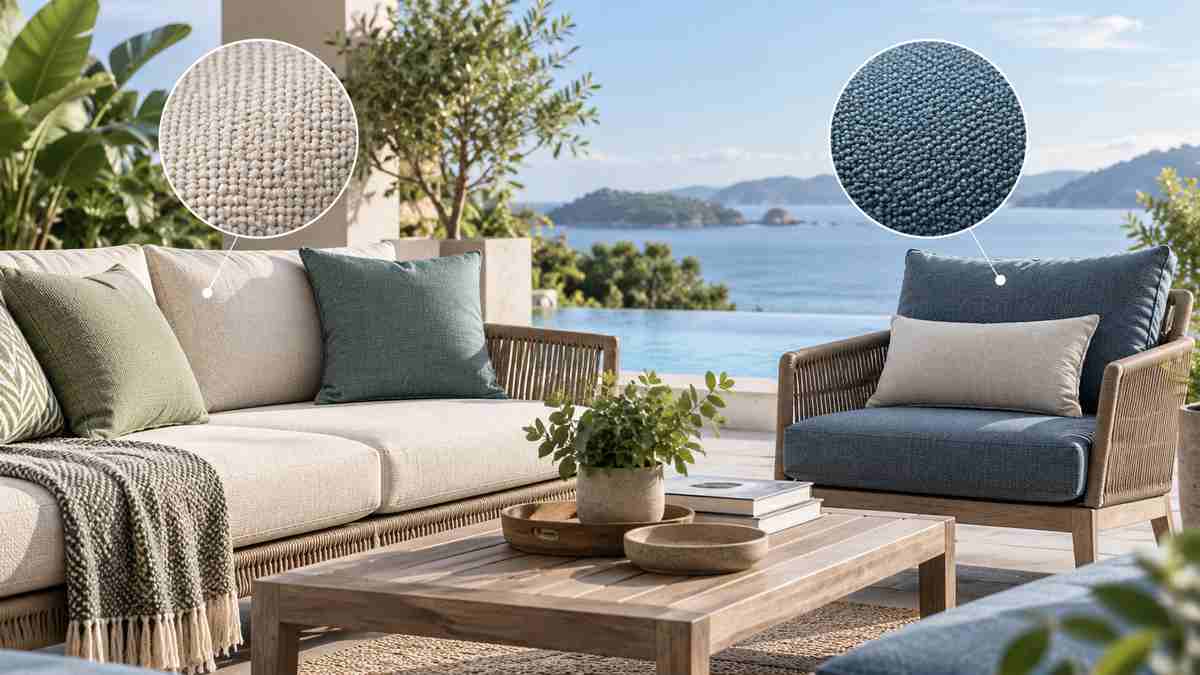
What Makes an Outdoor Cushion Quick-Dry?
A cushion dries efficiently when water can leave the cushion and air can circulate through or around the internal components.
This sounds simple, but several materials must work together.
A typical outdoor cushion may contain:
- Outdoor upholstery fabric
- Seat or back foam
- Fiber or batting
- Inner liner
- Zipper
- Sewing thread
- Piping
- Velcro
- Drainage fabric or mesh
If one layer traps moisture, the entire cushion may remain wet even when the outer fabric feels dry.
Buyer takeaway: When evaluating quick-dry outdoor cushions, request the complete cushion construction rather than approving the outer fabric and foam separately.
1. Quick-Dry Outdoor Cushions Start with the Right Foam Structure
Foam is one of the most important parts of a moisture-management system.
Reticulated polyurethane foam is manufactured with a highly open internal structure. These open pathways support airflow and allow water to move through the foam rather than remaining trapped inside dense cells.
Reticulated foam is used in applications including outdoor cushions and ventilated seating. Buyers interested in the material technology can review this information from Carpenter Co.
However, buyers should not assume that the words “quick-dry foam” automatically guarantee the correct specification.
Important questions include:
- What type of foam is being used?
- What is its firmness?
- What is the intended seat load?
- Is the foam designed for frequent or occasional use?
- How does water leave the foam?
- Does the construction allow sufficient airflow?
Seat comfort also matters. A hospitality sofa used for several hours at a time may need a different firmness and construction from a decorative back cushion.
What About Standard Polyurethane Foam?
Conventional polyurethane foam can still be used in outdoor furniture when the complete cushion is designed to protect the foam from excessive water entry.
However, standard foam should not automatically be marketed as quick-dry simply because it is covered with outdoor fabric.
For exposed poolside or resort applications, buyers should pay particular attention to water entry, moisture retention and ventilation.
What About Closed-Cell Foam?
Closed-cell foam resists water penetration differently because the cell structure is largely sealed.
This can be useful for particular marine or highly exposed applications, but firmness, comfort, price and intended use need to be evaluated separately.
There is no single foam solution that is ideal for every outdoor cushion program.
2. Build a Clear Drainage Path
Even highly breathable foam cannot perform effectively if the cushion cover prevents water from leaving.
For quick-dry outdoor cushions, the cushion should provide a logical drainage path from the internal foam toward the exterior.
Depending on product design, drainage details may include:
- Breathable or open-weave cushion underlining
- Mesh sections
- Strategically positioned openings
- Drainage-friendly zipper placement
- Reduced moisture-trapping internal layers
The bottom of the cushion is particularly important because gravity naturally directs water downward.
If the underside is completely sealed by a material that does not allow moisture to escape, water may remain inside even when the upper fabric is highly water-repellent.
This is why drainage should be discussed during product development, not after a wet-weather problem appears in the market.
3. Choose Outdoor Fabric by Performance, Not Marketing Terms
The outer fabric is the first layer exposed to rain, humidity, spills, cleaning and sunlight.
However, “outdoor fabric,” “water-resistant,” “water-repellent” and “waterproof” should not automatically be treated as equivalent terms.
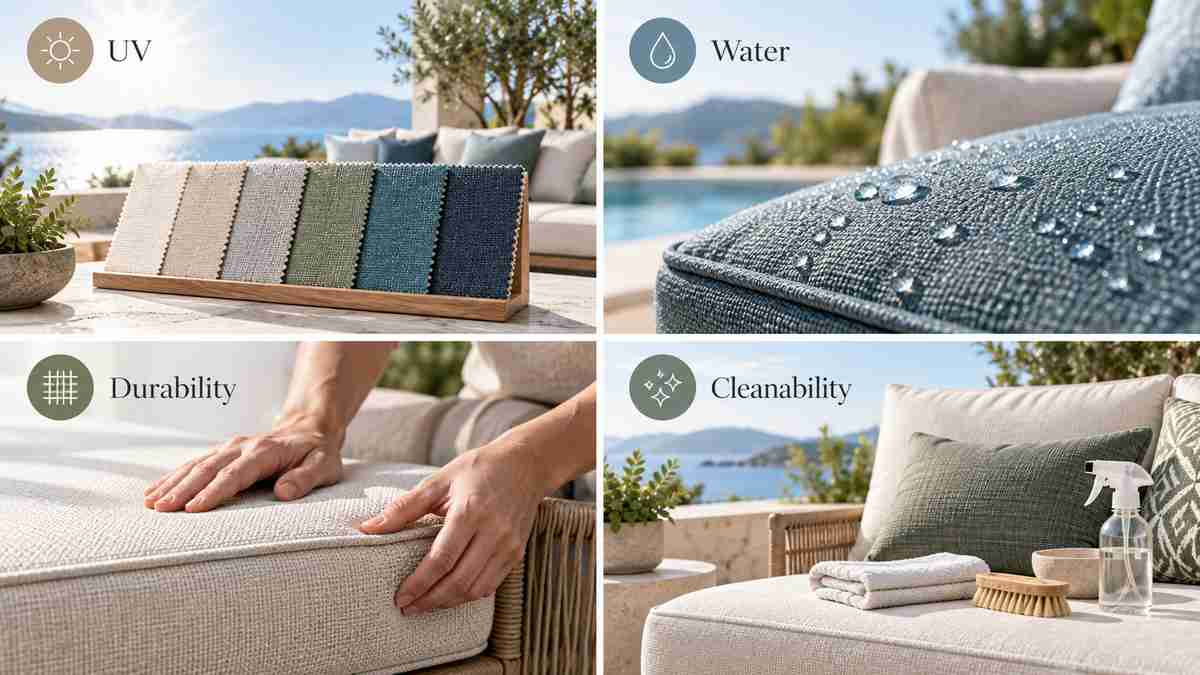
A water-repellent finish can help reduce surface wetting, but it does not automatically make a cushion waterproof.
The AATCC test-method portfolio includes methods relating to water repellency, rain resistance, moisture management and textile drying performance.
For example, AATCC TM22 evaluates resistance to surface wetting through a controlled spray test.
B2B buyers should therefore request actual performance information instead of relying only on general claims such as “all-weather fabric.”
Useful fabric information may include:
- Fiber composition
- Fabric weight
- Water-repellent finish
- UV or lightfastness performance
- Abrasion resistance
- Tear and tensile performance
- Cleaning instructions
- Color consistency
- Relevant certifications
For a detailed comparison of two common outdoor upholstery fibers, see our guide to Olefin vs Polyester Outdoor Fabric.
You can also explore our article about performance outdoor fabrics and the specifications B2B buyers should evaluate.
4. Seams, Zippers and Inner Layers Matter
The performance of quick-dry outdoor cushions can be affected by components that are easy to overlook during quotation.
For example, a cushion may use excellent foam and fabric but still retain moisture because an inner layer blocks airflow.
Buyers should review:
- Zipper location
- Zipper length
- Seam construction
- Piping
- Thread specification
- Inner liner material
- Batting or fiber wrap
- Drainage underlining
Removable covers can also make cleaning and replacement easier for hospitality and retail programs.
For hotel and resort projects, maintenance teams should be able to understand how covers are removed, washed, dried and reinstalled without unnecessarily damaging the cushion.
5. Quick-Dry Outdoor Cushions Also Need Airflow
Drainage removes liquid water, while airflow helps remaining moisture evaporate.
A cushion pressed tightly against a solid surface may dry more slowly than one with ventilation beneath it.
The furniture structure therefore also matters.
Slatted seating surfaces, mesh support systems or open furniture construction can support air circulation around the cushion.
In contrast, a completely enclosed seat pan may require additional drainage planning.
The cushion and furniture frame should therefore be developed as one system.
6. Match the Cushion Specification to the Application
Not every outdoor environment requires the same quick-dry specification.
| Application | Key Cushion Priorities |
|---|---|
| Poolside Furniture | Fast drainage, low moisture retention, easy cleaning and strong UV performance |
| Beach Resort | Drainage, humidity management, UV performance, cleanability and replacement consistency |
| Hotel Terrace | Comfort, commercial durability, maintenance and weather resistance |
| Covered Patio | Comfort, fabric appearance, stain resistance and moderate moisture management |
| Residential Retail | Comfort, appearance, care instructions, price positioning and easy maintenance |
For example, an exposed resort sun lounger may require more aggressive moisture management than a sofa installed under a covered hotel terrace.
Saigon Wicker’s SAMOA outdoor sun lounger and MONTEGO outdoor sofa set illustrate how cushion requirements can change between reclining poolside products and deep lounge seating.
7. B2B Buyers Should Approve the Complete Cushion Specification
The most important sourcing lesson is simple: do not approve a quick-dry system based only on a fabric swatch or foam sample.
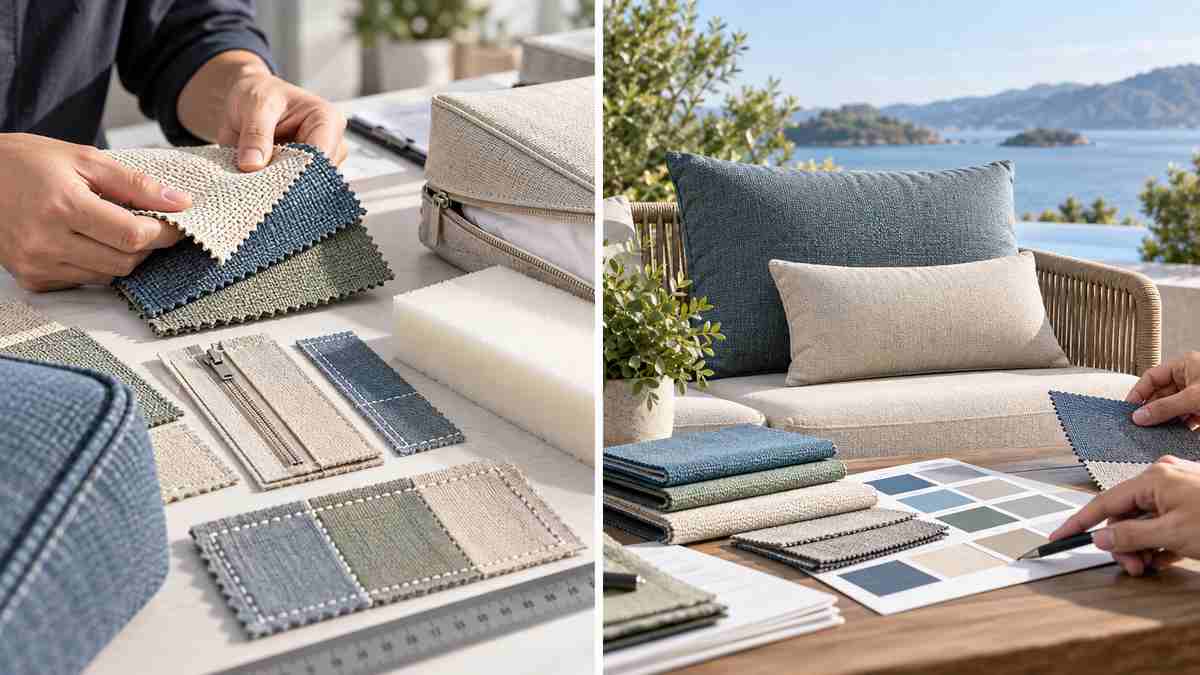
A complete specification may include:
- Cushion dimensions
- Foam type
- Foam thickness
- Foam firmness
- Fabric composition
- Fabric weight
- Color reference
- Water-repellency requirements
- UV or lightfastness requirements
- Inner liner
- Batting
- Drainage construction
- Zipper specification
- Thread
- Piping
- Velcro
- Cleaning instructions
Before mass production, buyers should inspect and test the complete cushion sample under conditions that reflect the intended application.
This is especially important for hospitality projects where frequent cleaning, repeated guest use and regular exposure can reveal issues that may not appear during a simple showroom inspection.
Quick-Dry Outdoor Cushion Development at Saigon Wicker
Saigon Wicker manufactures outdoor furniture for international B2B markets and builds on more than 20 years of cushion-manufacturing experience through Ngoc Phuc Cushion.
Our outdoor furniture programs can combine powder-coated aluminum, steel, rope, synthetic wicker, wood and outdoor fabrics with customized seat and back cushions.
Depending on project requirements and product feasibility, cushion development can include adjustments to:
- Foam specifications
- Cushion thickness
- Seat and back cushion construction
- Fabric type and color
- Zippers
- Piping
- Velcro
- Drainage details
- Labels and packaging
Learn more about our company and manufacturing background and why international buyers work with Saigon Wicker as an outdoor furniture manufacturing partner.
Frequently Asked Questions About Quick-Dry Outdoor Cushions
What are quick-dry outdoor cushions?
Quick-dry outdoor cushions are designed so moisture can leave the cushion efficiently through a combination of suitable foam, drainage construction, breathable components and outdoor fabric.
What type of foam is used in quick-dry outdoor cushions?
Reticulated open-cell polyurethane foam is commonly considered for applications requiring high airflow and efficient water drainage. The correct foam still depends on comfort, firmness, usage frequency and project requirements.
Does outdoor fabric make a cushion quick-dry?
Not by itself. Fabric is only one part of the cushion. Foam, seams, liners, drainage, airflow and the furniture structure also influence total drying performance.
Are quick-dry outdoor cushions waterproof?
Not necessarily. Quick-dry construction focuses on managing moisture and allowing water to leave efficiently. Waterproof construction is a different performance concept and should be defined by an actual specification.
Are quick-dry cushions suitable for hotel pools?
They can be particularly useful for poolside and hospitality environments where cushions may experience splash, cleaning and regular humidity. The exact specification should match usage frequency, climate and maintenance requirements.
Should the bottom of an outdoor cushion be breathable?
In many drainage-focused cushion designs, a breathable or water-draining underside can help moisture escape. The correct construction depends on the specific cushion and furniture design.
What should B2B buyers request before approving outdoor cushions?
Buyers should request the foam specification, fabric data, cushion construction, drainage details, dimensions, firmness, color reference, cleaning instructions and relevant test or certification information.
Conclusion
Quick-dry outdoor cushions are not created by one material alone.
Effective moisture management requires the foam, fabric, drainage path, seams, liner, zipper, airflow and furniture structure to work together.
For B2B buyers, the best approach is to define the application first and then approve the complete cushion specification before mass production.
This reduces uncertainty and helps create outdoor furniture that balances comfort, appearance, maintenance and moisture performance for the intended market.
Develop Outdoor Cushions for Your Next Collection
Developing outdoor sofas, lounge chairs, daybeds, sun loungers or hospitality furniture?
Send Saigon Wicker your product drawings, reference images, cushion dimensions, fabric requirements, foam specifications, target quantities and project conditions. Our team can review the requirements together with the complete furniture construction.
Contact Saigon Wicker for B2B product development and quotation →