For importers, wholesalers, retailers, hospitality groups, and sourcing companies, comparing olefin vs polyester outdoor fabric at fiber level alone is therefore not enough.
The better sourcing approach is to compare the actual fabric specification and ask how it performs under the conditions in which the furniture will be used.
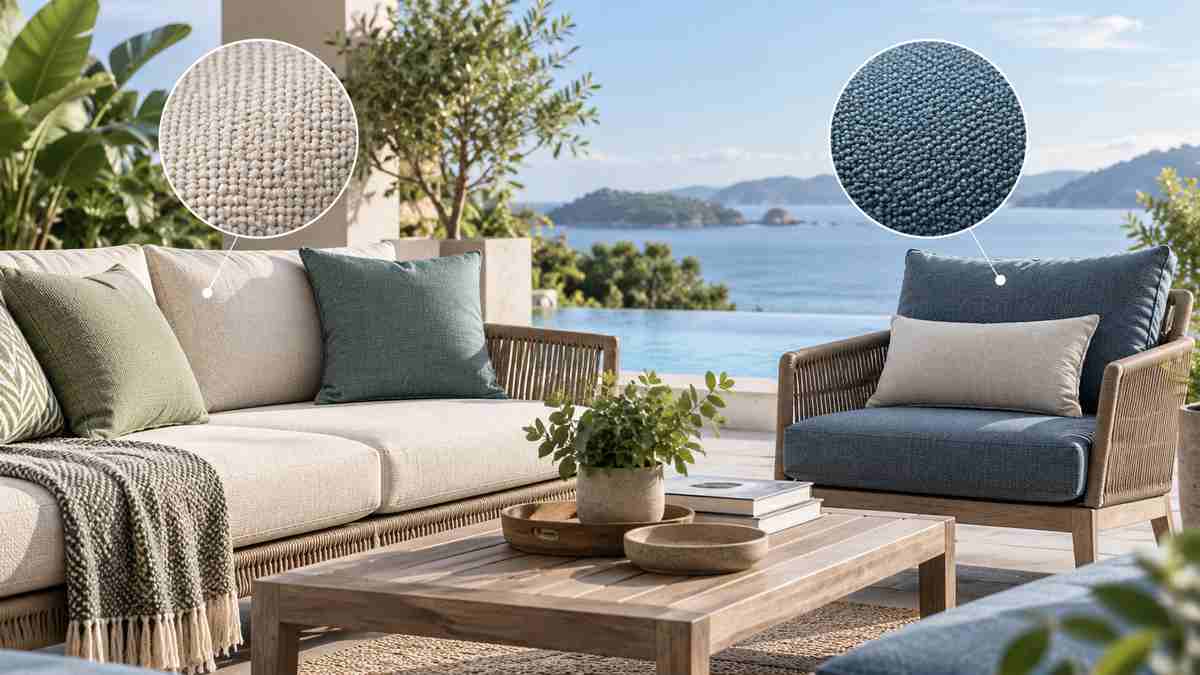
Olefin vs Polyester Outdoor Fabric: Quick Comparison
Before looking at each factor in detail, the following comparison gives B2B buyers a practical starting point.
| Factor | Olefin | Polyester |
|---|---|---|
| Fiber family | Usually polypropylene | Usually PET polyester |
| Moisture absorption | Very low | Low |
| Drying potential | Generally very good when fabric construction allows drainage | Generally good, depending on weave and finish |
| UV performance | Depends on UV stabilization, pigmentation, and fabric specification | Depends on UV stabilization, dyeing, finish, and fabric specification |
| Color options | Wide range depending on supplier | Very wide range of colors, patterns, and finishes depending on supplier |
| Water repellency | Fiber absorbs very little moisture, but finished-fabric repellency still depends on construction and treatment | Often enhanced through outdoor finishes or coatings |
| Hand feel | Varies by yarn and weave | Varies widely from smooth to textured |
| Typical positioning | Outdoor-focused residential and hospitality cushions | Broad residential, commercial, and value-oriented outdoor applications depending on grade |
The key point is that neither fiber name guarantees performance.
A premium outdoor Polyester can be more suitable than a poorly specified Olefin, and a well-engineered Olefin can outperform a basic Polyester in demanding outdoor use.
For professional sourcing, the olefin vs polyester outdoor fabric comparison should always consider the complete fabric specification rather than fiber composition alone.
What Is Olefin Outdoor Fabric?
Olefin is the textile name commonly used for fibers made from polyolefins, with polypropylene being widely used in outdoor applications.
One of its most useful characteristics for outdoor furniture is its extremely low moisture regain. Polypropylene absorbs very little atmospheric moisture compared with many other textile fibers.
This can help an olefin outdoor fabric dry efficiently when the complete fabric and cushion construction also allows moisture to escape.
Typical applications include:
- Outdoor seat cushions
- Back cushions
- Decorative pillows
- Outdoor lounge furniture
- Hospitality seating
- Outdoor rope or woven textile applications depending on specification
However, Olefin should not automatically be described as “waterproof.”
The fiber itself absorbs very little moisture, but the finished textile still contains spaces between yarns. Water performance therefore depends on weave density, backing, finish, seams, cushion construction, and the required application.
In an olefin vs polyester outdoor fabric comparison, Olefin is often considered when low moisture absorption and regular outdoor exposure are important project requirements.
What Is Polyester Outdoor Fabric?
Polyester is one of the world’s most widely used synthetic textile fibers and is available in an enormous range of constructions, weights, colors, textures, and price points.
Polyester also has low moisture regain compared with natural fibers, which makes it practical for many outdoor textile applications.
However, a fabric being labeled “Polyester” does not automatically make it suitable for continuous outdoor exposure.
An outdoor polyester fabric may use:
- UV stabilizers
- Outdoor-grade dyes
- Water-repellent finishes
- Back coatings
- Higher fabric weights
- Specific weave constructions
- Additional stain-resistant treatments
Buyers should therefore distinguish between ordinary Polyester textile and Polyester specifically engineered and tested for outdoor use.
When evaluating olefin vs polyester outdoor fabric, outdoor-grade Polyester should be judged by its actual UV, water-repellency, durability, and colorfastness specifications.
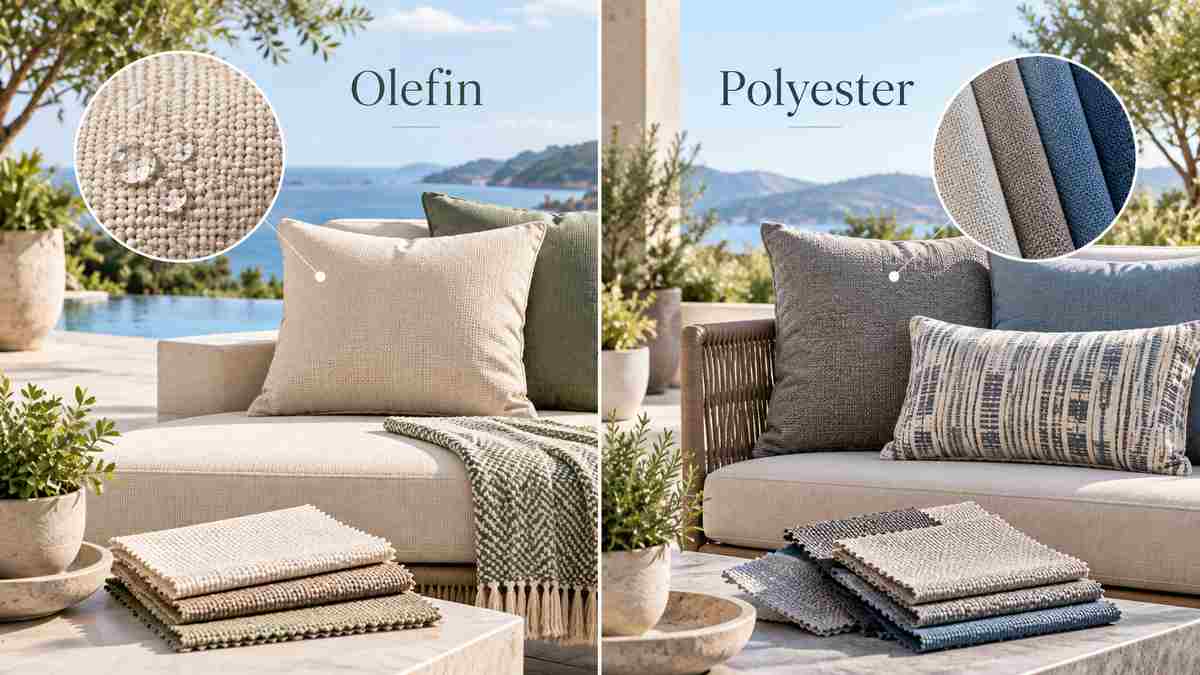
1. Olefin vs Polyester Outdoor Fabric: Which Handles Moisture Better?
This is one of the clearest technical differences in the olefin vs polyester outdoor fabric comparison.
Polypropylene fiber has extremely low moisture regain, while Polyester also has low moisture regain but typically absorbs slightly more atmospheric moisture.
For outdoor cushions, this can make Olefin attractive for environments exposed to:
- Frequent humidity
- Poolside splash
- Occasional rain
- Frequent cleaning
- Warm climates
However, buyers should avoid assuming that low fiber absorption automatically means the complete cushion will dry quickly.
Drying also depends on:
- Fabric weave
- Water-repellent finish
- Cushion seams
- Zipper construction
- Foam type
- Inner liner
- Drainage
- Air circulation
A low-absorption fabric wrapped around foam that traps water can still create a slow-drying cushion.
For this reason, outdoor cushion performance should be evaluated as a complete system.
Moisture performance is therefore an important part of the olefin vs polyester outdoor fabric decision, especially for poolside, resort, and humid-climate applications.
2. Olefin vs Polyester Outdoor Fabric: UV and Colorfastness
UV performance is one of the areas where oversimplified marketing claims can create confusion.
It is not accurate to assume that every Olefin automatically has excellent UV resistance or that every Polyester fades quickly.
The final result depends on the exact fiber, stabilizers, pigments or dyes, fabric construction, finishing, color, exposure conditions, and test requirements.
When comparing olefin vs polyester outdoor fabric, B2B buyers should request actual colorfastness or weathering data for the specific fabric being quoted.
The
AATCC textile test-method portfolio
includes methods related to textile colorfastness, outdoor exposure, and other performance properties.
Instead of accepting only:
“This fabric is UV-resistant.”
ask:
- What UV or lightfastness test was used?
- How long was the exposure?
- What rating was achieved?
- Was the exact production color tested?
- Does the test represent the intended application?
This creates a much stronger basis for comparison.
For B2B buyers, UV testing is one of the most important technical criteria when comparing olefin vs polyester outdoor fabric for long-term outdoor use.
3. Water-Resistant Is Not the Same as Waterproof
This distinction matters when specifying any outdoor cushion fabric.
A water-repellent fabric is designed to resist or delay surface wetting.
A waterproof system is designed to prevent water penetration under defined conditions.
Outdoor upholstery fabrics commonly prioritize water repellency, drainage, breathability, and drying rather than creating a completely sealed cushion.
B2B buyers should therefore ask what the supplier means when using terms such as:
- Water-resistant
- Water-repellent
- Waterproof
- Quick-dry
- All-weather
These terms should be connected to an actual specification rather than used only as marketing language.
This is why the olefin vs polyester outdoor fabric comparison should separate fiber moisture absorption from the water-repellency performance of the finished textile.
4. Olefin vs Polyester Outdoor Fabric: Which Is More Durable?
There is no universal winner.
Durability depends heavily on the actual fabric construction.
Important variables include:
- Fabric weight
- Yarn size
- Weave density
- Tensile strength
- Tear strength
- Abrasion resistance
- Pilling resistance
- Seam performance
- UV exposure
- Cleaning frequency
A 230 g/m² Olefin and a 230 g/m² Polyester should not automatically be considered equivalent simply because their weights match.
Similarly, a heavier fabric is not automatically more durable if its yarn, weave, finishing, or seam performance is unsuitable.
When evaluating olefin vs polyester outdoor fabric, buyers should compare complete technical data rather than one specification in isolation.
Durability should therefore be evaluated through technical data when making an olefin vs polyester outdoor fabric purchasing decision.
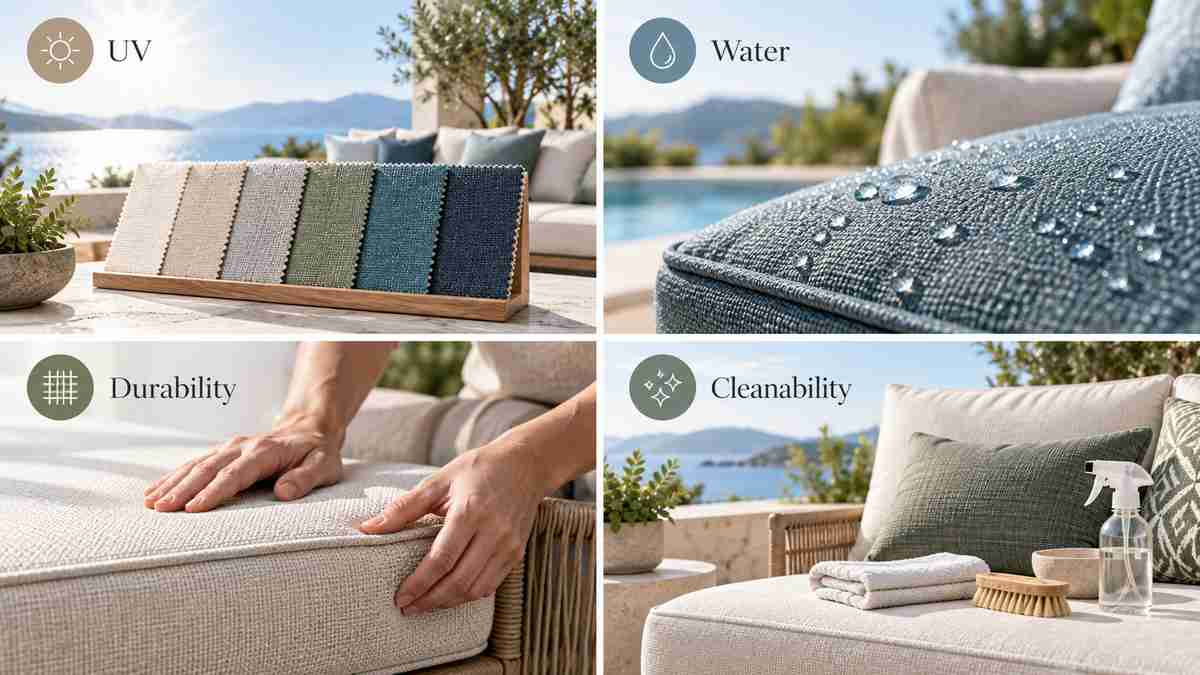
5. Which Fabric Is Easier to Clean?
Both materials can support relatively low-maintenance outdoor furniture when properly specified.
Olefin’s very low moisture absorption can make it practical for stains that are primarily water-based because liquids are less likely to be absorbed deeply into the fiber itself.
Polyester outdoor fabrics can also perform well when equipped with appropriate stain-resistant and water-repellent finishing.
However, stain performance depends on the type of contamination.
Outdoor cushions may be exposed to:
- Food
- Coffee
- Soft drinks
- Sunscreen
- Body oils
- Dirt
- Leaves
- Pool water
- Salt spray
Buyers should request the recommended cleaning method before approving the fabric.
A fabric that requires a complicated cleaning routine may not be ideal for restaurants, resorts, pool decks, or other high-traffic hospitality environments.
Cleaning requirements can also influence the olefin vs polyester outdoor fabric choice for hotels, restaurants, resorts, and high-traffic outdoor furniture.
For other low-maintenance material considerations, see our
Low-Maintenance Patio Furniture guide
.
6. Which Feels Better on Outdoor Cushions?
Fiber composition alone does not determine comfort.
The tactile experience of outdoor fabric depends strongly on:
- Yarn construction
- Weave
- Surface texture
- Fabric weight
- Finishing
- Cushion foam
- Cushion tension
- Seat geometry
Modern Olefin can range from relatively smooth to textured and woven surfaces.
Polyester is also available in a very broad range of textures and appearances.
For lounge furniture where customers remain seated for longer periods, buyers should evaluate a physical sample rather than selecting fabric from a digital color card alone.
The sample should be touched, folded, stretched, and viewed under natural light.
7. Colors, Patterns, and Collection Development
Fabric is not selected only for technical performance.
It also determines how an outdoor collection is positioned in the market.
Neutral tones such as:
- Ivory
- Beige
- Greige
- Light grey
- Stone
- Warm taupe
are frequently used for commercial outdoor collections because they coordinate easily with aluminum, rope, synthetic wicker, and wood.
More distinctive colors can help retailers create seasonal collections or support hotel and resort design concepts.
Polyester often provides broad flexibility in dyeing, printing, and decorative surface development, while Olefin also offers extensive outdoor color programs depending on the supplier and manufacturing process.
The best decision in an olefin vs polyester outdoor fabric comparison therefore depends partly on the visual direction of the collection.
8. Which Is More Cost-Effective for B2B Buyers?
Price should be evaluated against specification.
Standard Polyester fabrics can be highly cost-efficient, which can make them suitable for price-sensitive collections or outdoor products used under moderate exposure.
Olefin is also positioned competitively for many outdoor applications and may provide useful performance advantages where moisture handling and outdoor use are priorities.
But neither material has one fixed market price.
Fabric cost may change according to:
- Fabric weight
- Yarn specification
- Dyeing process
- Color
- MOQ
- Water-repellent finish
- UV treatment
- Backing
- Testing requirements
- Certification
- Order volume
A lower-cost fabric may become expensive if it creates premature fading, replacement claims, difficult maintenance, or poor customer reviews.
The right commercial comparison is therefore performance relative to target price, not fabric cost alone.
For commercial sourcing, the olefin vs polyester outdoor fabric decision should compare total performance and long-term value rather than fabric price alone.
What About OEKO-TEX Certification?
For B2B buyers, textile requirements may extend beyond durability.
Depending on the market or customer program, buyers may require documentation relating to restricted substances or textile safety.
OEKO-TEX STANDARD 100
provides certification for textiles tested for harmful substances.
A certification claim should always be verified against the actual fabric, supplier, certificate scope, and current certificate validity.
Do not assume that because one fabric from a mill is certified, every fabric supplied by that company automatically carries the same certification.
What Specifications Should B2B Buyers Request?
When sourcing either Olefin or Polyester, buyers should request more than a color card.
A useful outdoor furniture fabric specification may include:
- Fiber composition
- Fabric weight in g/m²
- Fabric width
- Yarn construction
- Weave type
- Color reference
- Lightfastness or weathering information
- Water-repellency specification
- Abrasion data
- Tear or tensile strength where required
- Pilling performance
- Care instructions
- MOQ
- Repeat-order color-control method
- Certification documentation where required
This information makes the olefin vs polyester outdoor fabric comparison far more meaningful.
Do Not Evaluate the Fabric Without the Cushion
This is particularly important for outdoor furniture.
The fabric is only one part of the cushion.
A typical outdoor cushion may also contain:
- Foam
- Fiber filling
- Inner liner
- Zipper
- Thread
- Velcro
- Piping
- Drainage construction
If the fabric dries quickly but the foam retains water, the complete cushion may still remain wet.
If the fabric has excellent UV performance but the sewing thread deteriorates, the cushion may still fail.
If the cover is removable but the zipper position is difficult to access, maintenance becomes inconvenient.
For this reason, B2B buyers should approve the complete cushion construction together with the fabric.
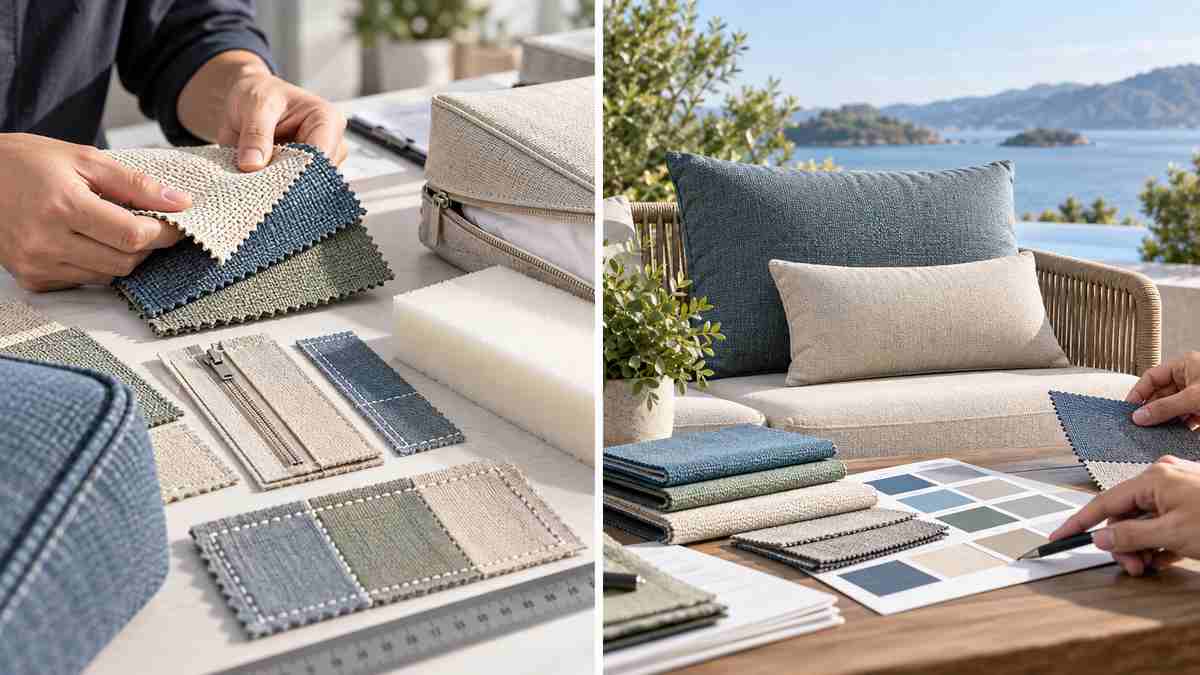
The best olefin vs polyester outdoor fabric specification may therefore change depending on whether the final product is intended for residential retail, hospitality, poolside, covered patio, or coastal use.
Which Fabric Is Better for Different Outdoor Applications?
Poolside Furniture
Low moisture absorption, efficient drying, washable surfaces, and resistance to frequent exposure should receive higher priority.
Well-specified Olefin can be an attractive option, but buyers should still review the complete fabric and cushion specification.
Covered Patio Furniture
Both Olefin and outdoor-grade Polyester may work effectively because direct weather exposure is reduced.
Design, comfort, color, cost, and cleaning requirements may become stronger decision factors.
Hotel and Resort Furniture
Buyers should consider durability, cleaning frequency, stain resistance, color consistency, replacement availability, and documentation.
A fabric that performs well technically but cannot be reordered consistently may create problems for long-term hospitality programs.
Retail Outdoor Furniture
Price, appearance, touch, color assortment, packaging, warranty positioning, and consumer-care instructions all become important.
Coastal Outdoor Furniture
Fabric should be considered together with salt exposure, humidity, frame coating, hardware, foam, drainage, and cleaning routine.
No textile should be selected independently from the rest of the furniture system.
Olefin vs Polyester Outdoor Fabric: Which Is Better?
There is no universal answer to olefin vs polyester outdoor fabric.
Consider Olefin when:
- Very low fiber moisture absorption is a priority
- The product is intended for regular outdoor exposure
- Quick-drying cushion design is important
- The selected Olefin specification provides suitable UV and colorfastness performance
- The available colors and texture fit the collection
Consider outdoor-grade Polyester when:
- The project requires a specific color, pattern, texture, or finish
- The selected Polyester has suitable outdoor UV and water-repellent specifications
- Cost positioning is particularly important
- The product is used in covered or controlled outdoor environments
- The technical data meets the buyer’s actual performance requirements
The important phrase in both lists is “the selected specification.”
Fiber name alone should not determine a professional B2B purchasing decision.
Outdoor Cushion Development at Saigon Wicker
Saigon Wicker manufactures outdoor furniture for international B2B markets using combinations of powder-coated aluminum, steel, outdoor rope, synthetic wicker, wood, Textilene, outdoor fabrics, and cushions.
Different product programs may require different fabric and cushion specifications depending on buyer requirements, product positioning, target environment, and market expectations.
Depending on product feasibility, customization can include:
- Olefin or Polyester fabric options
- Fabric colors
- Fabric weight
- Cushion thickness
- Seat and back cushion construction
- Foam specifications
- Piping
- Zippers
- Velcro
- Decorative pillows
- Labels
- Packaging
For additional material-selection guidance, explore our
Outdoor Rope vs PP Rattan guide
.
Before approving a bulk order, B2B buyers should review the olefin vs polyester outdoor fabric specification together with the cushion sample, test information, color reference, foam construction, and care requirements.
Frequently Asked Questions
Is Olefin better than Polyester for outdoor cushions?
Not automatically. Olefin has extremely low moisture absorption and can be very practical for outdoor use, while outdoor-grade Polyester can also provide strong performance when correctly engineered and treated. Buyers should compare the actual fabric specification and test data.
Does Olefin absorb water?
Polypropylene-based Olefin fiber has extremely low moisture regain. However, an Olefin fabric is not automatically waterproof because water can still pass through spaces in the weave, seams, or cushion construction.
Is Polyester suitable for outdoor cushions?
Yes, if the specific Polyester fabric is designed for outdoor use. Buyers should review UV or lightfastness performance, water-repellent treatment, fabric construction, abrasion, colorfastness, and care requirements.
Which outdoor fabric dries faster?
Olefin’s very low fiber moisture absorption can support efficient drying, but total cushion drying time also depends on fabric construction, foam, drainage, seams, airflow, and how much water enters the cushion.
Which fabric is more UV resistant?
UV performance depends on the exact fabric specification, stabilizers, dye or pigment system, color, and exposure conditions. Buyers should request lightfastness or weathering test results instead of selecting based solely on fiber name.
What fabric weight is best for outdoor cushions?
There is no single ideal g/m² for every application. Fabric weight should be evaluated together with yarn construction, weave, strength, abrasion resistance, hand feel, and intended product use.
What should B2B buyers request before approving outdoor fabric?
Request composition, weight, physical sample, approved color, UV or colorfastness information, water-repellency data, durability specifications, cleaning instructions, MOQ, certification documentation where required, and repeat-order color-control requirements.
Choose Outdoor Fabric by Performance, Not Fiber Name Alone
The olefin vs polyester outdoor fabric decision should be based on the complete product requirement.
Olefin offers extremely low moisture absorption and can be an excellent choice for many outdoor cushion programs. Polyester provides extensive design flexibility and can also perform effectively outdoors when engineered with suitable yarns, dyes, stabilizers, finishes, and fabric construction.
For professional B2B sourcing, the most important step is to define what the furniture needs to do.
Consider exposure, climate, usage frequency, cleaning, target price, color requirements, cushion construction, testing, and repeat-order needs.
The best outdoor cushion fabric is not simply Olefin or Polyester. It is the fabric specification that delivers the right balance of performance, appearance, comfort, cost, and consistency for the target market.
Discuss Your Outdoor Cushion Fabric Requirements With Saigon Wicker
If you are developing outdoor sofas, dining furniture, lounge collections, sun loungers, daybeds, or hospitality furniture, fabric and cushion specifications can be reviewed during product development.
Contact Saigon Wicker
and send us your product drawings, reference images, fabric requirements, cushion specifications, target quantities, or project brief.