
For importers, wholesalers, retailers, hospitality buyers and sourcing companies, the key question is not simply, “Does this factory have certificates?” A better question is: What exactly does each audit, certification or test cover, and is it relevant to my order?
This guide explains the main areas of outdoor furniture compliance, what B2B buyers should verify and why one certificate cannot replace a complete supplier assessment.
Outdoor Furniture Compliance: Certification, Audit or Product Test?
Before reviewing a supplier’s documents, buyers should separate three different concepts.
| Type | Main Purpose | Examples |
|---|---|---|
| Factory / Social Audit | Evaluates workplace practices, labour conditions, health and safety or related management systems. | amfori BSCI, SMETA |
| Material / Chain Certification | Applies to specific materials, supply chains or certified articles. | FSC®, OEKO-TEX® STANDARD 100 |
| Product Testing | Evaluates whether a finished product meets specified mechanical, chemical, durability or market requirements. | Testing required by buyer, market or applicable product standard |
This distinction is one of the most important parts of outdoor furniture compliance.
A social audit does not prove that a dining chair has passed a mechanical-strength test. Likewise, a certified fabric does not automatically mean the complete sofa meets every requirement for the buyer’s destination market.
1. Understand What amfori BSCI Covers
amfori BSCI is widely encountered by international buyers sourcing from manufacturing markets.
It is focused on social compliance and responsible supply-chain practices. Monitoring can evaluate areas related to working conditions, worker protection and occupational health and safety.
amfori’s monitoring system also uses audit ratings. These ratings are based on the evidence assessed by auditors across defined performance areas.
For B2B furniture buyers, a BSCI audit can therefore form part of supplier due diligence, particularly when retailers or importers have social-compliance requirements for factories in their supply chains.
However, buyers should avoid interpreting BSCI as a product-quality certificate.
A BSCI audit does not tell you whether:
- A chair has the correct dimensions
- A frame meets your mechanical requirements
- Powder coating is suitable for the intended environment
- A cushion meets your specified performance
- A table passes a required product test
These areas require separate specifications, inspections or testing.
Learn more directly from amfori’s BSCI audit information.
2. SMETA Is an Audit Methodology, Not a Certification
This is an important distinction because the term “SMETA certified factory” is frequently used informally.
SMETA stands for Sedex Members Ethical Trade Audit. According to Sedex, SMETA is a social-audit methodology rather than a certification or pass/fail system.
SMETA can assess areas including:
- Labour standards
- Health and safety
- Environmental performance
- Business ethics
The scope depends on the type of audit being conducted.
From an outdoor furniture compliance perspective, this matters because buyers should request the actual audit information relevant to the supplier site instead of asking only whether a factory “has SMETA.”
The buyer may need to review the audit date, scope and any corrective actions according to its own sourcing policy.
Read Sedex’s official explanation of the SMETA audit methodology.
3. FSC® Matters When Certified Wood Is Required
Wood remains important in outdoor furniture, particularly for teak, acacia and other wooden components used in tabletops, chair arms, sofa details and full wooden collections.
When an order requires FSC-certified material, buyers should understand the role of FSC Chain of Custody certification.
The Forest Stewardship Council explains that Chain of Custody certification verifies the path of eligible forest-based materials through the supply chain from sourcing to finished goods.
This makes FSC particularly relevant when a buyer’s specification requires an FSC claim for wooden products or components.
However, FSC should not be interpreted as a durability test for outdoor furniture.
It does not replace checks relating to:
- Wood species
- Moisture content
- Construction
- Joint quality
- Surface finishing
- Outdoor performance
- Product dimensions
For an outdoor furniture compliance review, the buyer should verify whether the certificate covers the organization, product group and supply-chain arrangement relevant to the proposed order.
See the official FSC Chain of Custody certification guide.
4. OEKO-TEX® STANDARD 100 Is Relevant to Textile Safety
Outdoor furniture often includes cushions, upholstery fabric, covers, pillows and other textile components.
OEKO-TEX® STANDARD 100 is a certification for textiles tested for harmful substances. According to OEKO-TEX, testing can cover textile products and their components, with requirements depending on their intended level of skin contact.
For furniture buyers, this can be relevant when certified textile materials are included in the sourcing specification.
But again, the scope matters.
An OEKO-TEX-certified fabric should not automatically be interpreted as certification of the entire outdoor sofa, chair or cushion system.
Buyers should identify:
- Which textile article is certified
- Whether the certificate is current
- Whether the supplier and article match the documentation
- Whether accessories or additional components are included where relevant
OEKO-TEX describes STANDARD 100 as a label for textiles tested for harmful substances.
5. For Outdoor Furniture Compliance, Verify the Scope — Not Just the Logo
A logo in a company profile is only the beginning of a buyer’s compliance review.
The document behind the logo is what matters.
Before placing a purchase order, professional buyers should confirm:
- Name of the audited or certified company
- Factory or site address
- Certificate or audit number where applicable
- Issue and expiry dates
- Scope
- Products or materials covered
- Issuing or auditing organization
- Any required corrective-action status
This is particularly important when a supplier operates multiple factories or obtains material from several upstream suppliers.
A document belonging to one facility, supplier or textile article should not automatically be assumed to cover every product in the catalogue.
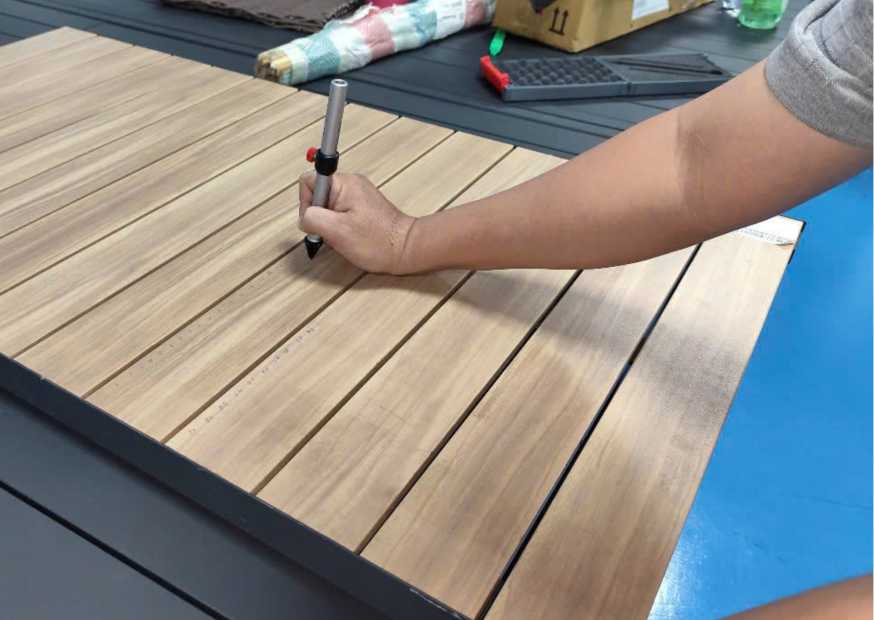
6. Compliance Does Not Replace Product Testing and Quality Control
One of the biggest sourcing mistakes is assuming that factory or material certifications guarantee finished-product performance.
They do not necessarily address the same risks.
A complete outdoor furniture compliance program may also require order-specific checks such as:
- Dimensions and tolerances
- Structural stability
- Static or fatigue loading
- Sharp edges and pinch points
- Hardware and fasteners
- Coating performance
- Fabric performance
- Chemical requirements
- Labelling
- Packaging requirements
The exact requirements depend on the product, customer and destination market.
This is why buyers should provide the required standards or test protocols during quotation and development rather than waiting until mass production is complete.
You can see more about Saigon Wicker’s production and QC areas on our Factory & Manufacturing page.
7. Outdoor Furniture Compliance Checklist for B2B Buyers
Instead of requesting “all certificates,” send suppliers a structured outdoor furniture compliance checklist based on your actual purchasing requirements.
| Buyer Check | What to Verify |
|---|---|
| Factory Social Compliance | Required social audit, site covered, audit date and buyer acceptance criteria |
| Wood Sourcing | Whether FSC certification and an FSC product claim are required |
| Textiles | Required OEKO-TEX certification or other chemical/textile requirements |
| Product Standards | Testing required for the intended product and destination market |
| Materials | Frame, wood, rope, wicker, fabric, foam, glass and hardware specifications |
| Quality Control | Approved sample, dimensions, workmanship, finish and final inspection criteria |
| Documentation | Current reports, certificates, test reports and traceability documents where required |
This approach is more effective than collecting documents with no clear connection to the order.
It also allows the factory to identify requirements before costing, sampling and material purchasing begin.
Outdoor Furniture Compliance at Saigon Wicker
Saigon Wicker manufactures outdoor furniture for international B2B customers and publicly lists BSCI, SMETA, FSC® and OEKO-TEX® among the compliance and certification frameworks associated with its operations and sourcing.
Because each audit or certification has a different scope, buyers should discuss the requirements of each project during quotation and product development.
Relevant documentation can then be reviewed according to the specific product, material, market and purchasing requirement.
Learn more on our Certifications page, view our Company Overview, or explore our Factory & Manufacturing capabilities.
Frequently Asked Questions About Outdoor Furniture Compliance
What certifications should an outdoor furniture factory have?
There is no universal list that applies to every buyer. Required outdoor furniture compliance depends on the destination market, retailer, product type, materials and sourcing policy. Buyers should define required factory audits, material certifications and product tests separately.
Is SMETA a certification?
No. Sedex describes SMETA as a social-audit methodology rather than a certification or pass/fail system. Buyers should review the audit scope and relevant findings rather than treating SMETA as a product certificate.
Is BSCI a product certification?
No. amfori BSCI relates to social-compliance monitoring and audits within supply chains. It does not certify the structural quality or performance of an outdoor furniture product.
Does FSC certification mean outdoor furniture is more durable?
No. FSC Chain of Custody relates to the sourcing and traceability of eligible forest-based materials. Outdoor durability still depends on wood species, construction, finishing, maintenance and product design.
Does OEKO-TEX certify an entire outdoor sofa?
Not automatically. OEKO-TEX STANDARD 100 applies to certified textile articles and relevant components within its certification scope. Buyers should confirm exactly which fabric or textile component is covered.
Do factory certifications replace product testing?
No. Factory audits, material certifications and product tests serve different purposes. Finished furniture may still need mechanical, chemical, durability or market-specific testing according to buyer requirements.
What documents should B2B buyers request before ordering?
A practical outdoor furniture compliance review can include current factory audit information, relevant material certificates, order-specific test reports, approved material specifications, QC requirements and traceability documentation where required.
Conclusion
Outdoor furniture compliance is not about collecting as many logos as possible.
The goal is to understand which requirement applies to the factory, which applies to a material and which applies to the finished product.
BSCI and SMETA can support social-supply-chain due diligence. FSC can support verified forest-material sourcing and chain of custody. OEKO-TEX STANDARD 100 can provide certification for relevant textiles tested for harmful substances. Product testing and quality control then address additional requirements that these systems do not replace.
For B2B buyers, verifying the scope of each document before ordering makes supplier evaluation clearer and helps reduce compliance surprises later in the project.
Review Your Outdoor Furniture Requirements with Saigon Wicker
Planning a wholesale collection, retail program, hospitality project or custom outdoor furniture order?
Send Saigon Wicker your product specifications, destination market, target quantity and required audit, certification or testing requirements. Our team can review them during quotation and product development.