
This guide looks at seven fabric directions that matter for outdoor furniture development in 2027 — and the technical details B2B buyers should still check behind the appearance.
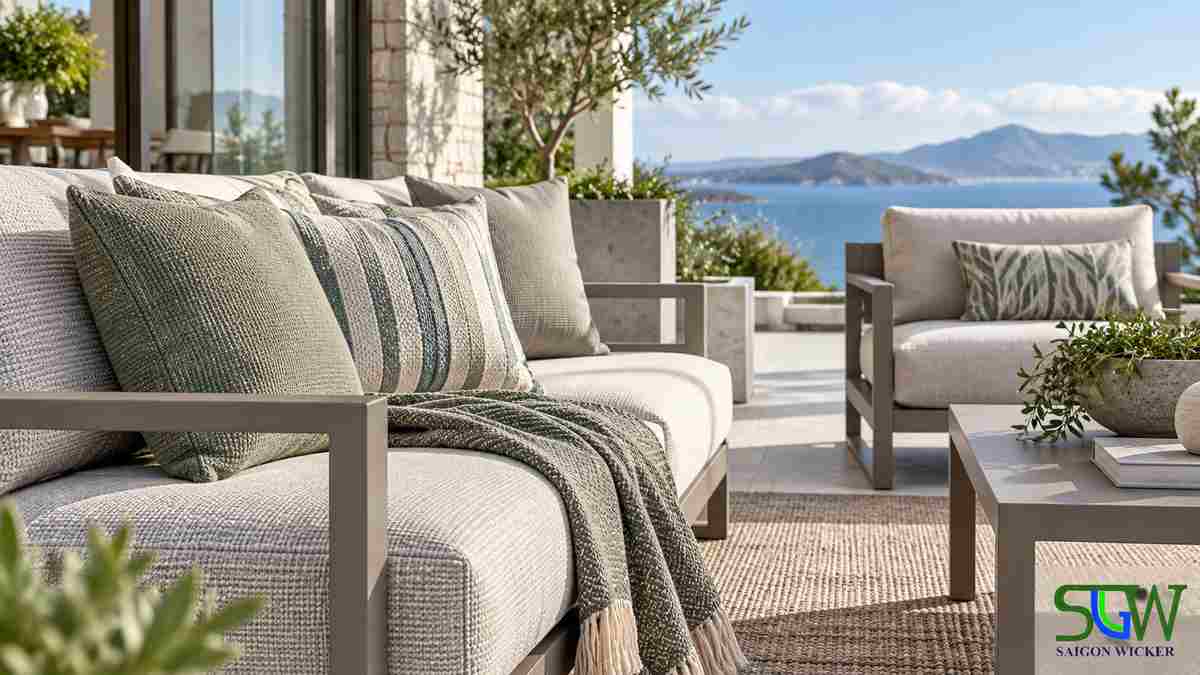
Performance Outdoor Fabrics 2027: Quick Trend Overview
| Trend | What It Adds | B2B Check |
|---|---|---|
| Textured Weaves | Depth and premium tactile character | Abrasion, snagging and cleanability |
| Stripes | Resort and contemporary personality | Repeat size, direction and cutting consistency |
| Subtle Patterns | More visual interest without overwhelming furniture | Pattern alignment and repeat-order consistency |
| Warm Neutrals | Softer indoor-outdoor appearance | Colorfastness and production shade control |
| Mixed Textiles | Layered collection styling | Compatibility across fabrics and SKUs |
| Indoor-Look Upholstery | More residential comfort | Outdoor performance must still be verified |
| Specification-Driven Selection | Better long-term commercial value | Testing, documentation and approved samples |
The important change is that performance outdoor fabrics are increasingly being selected for both technical capability and the role they play in the visual identity of an outdoor collection.
1. Texture Is Becoming a Design Feature, Not Just a Fabric Detail
For many years, outdoor upholstery was dominated by relatively smooth, practical-looking fabrics.
That is changing.
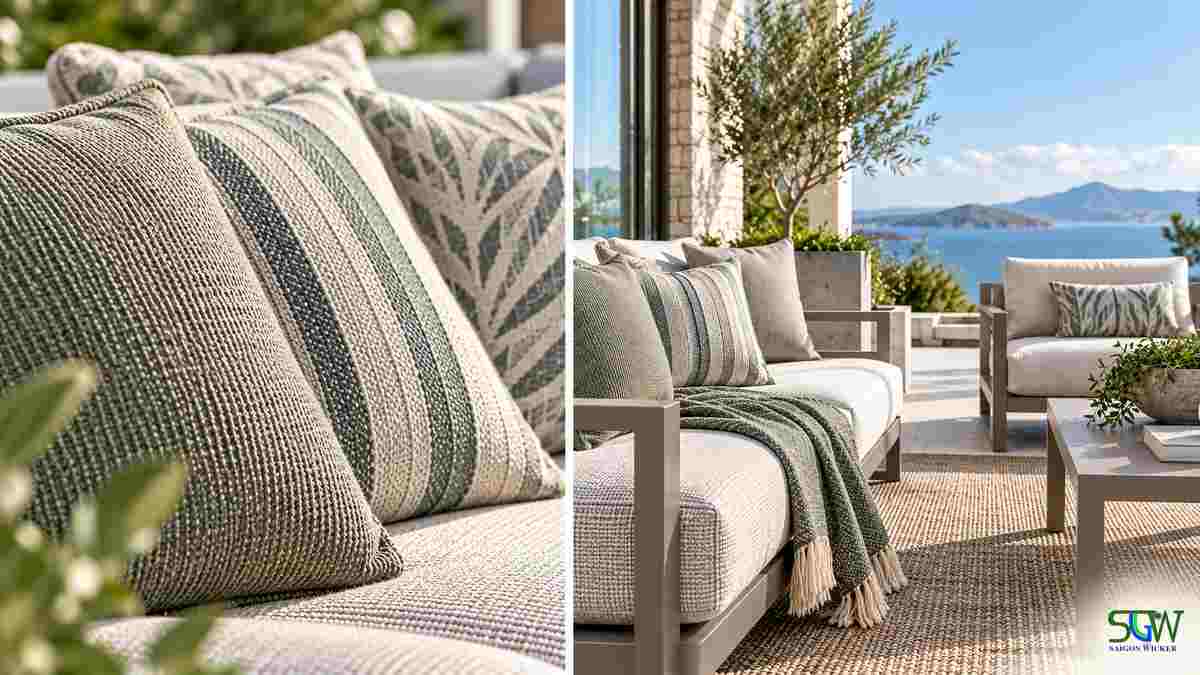
Outdoor furniture is increasingly adopting woven textures that create more visual depth and a softer residential character.
These may include:
- Fine basket weaves
- Heathered textures
- Linen-look surfaces
- Chunkier woven structures
- Bouclé-inspired outdoor textures
- Subtle multi-tone yarn effects
Heimtextil’s 2027–2028 textile trend direction places particular emphasis on tactility, texture, longevity, and the way material performance is experienced rather than hidden.
Explore Heimtextil Trends 27/28
.
This direction translates naturally into outdoor furniture.
A simple aluminum sofa can feel significantly more premium when the cushion fabric has a refined woven texture rather than a flat surface.
For B2B buyers, however, textured performance outdoor fabrics should still be reviewed for snagging, abrasion, cleaning, seam performance, and suitability for the intended use.
2. Stripes Are Returning as a Strong Outdoor Pattern
Stripes are one of the clearest pattern directions in current outdoor design.
They can range from narrow ticking stripes to wider cabana-inspired patterns.
ELLE Decor highlighted outdoor stripes as a major fabric direction in 2026, while broader patio trend coverage has also pointed toward more expressive upholstery rather than completely plain outdoor seating.
See ELLE Decor’s outdoor stripe trend
.
Stripes work particularly well because they can change the personality of a collection without requiring a new furniture frame.
A neutral aluminum sofa with plain ivory cushions can feel minimal and architectural.
The same product with a carefully selected stripe can feel:
- Coastal
- Resort-inspired
- Mediterranean
- Contemporary
- Playful
- Classic
This makes patterned performance outdoor fabrics useful for retailers developing multiple visual stories around one core furniture design.
3. Pattern Scale Must Match the Furniture
A pattern that looks attractive on a fabric sample does not automatically work on a finished cushion.
This is particularly important as balcony furniture, compact loveseats, dining chairs, and smaller outdoor collections continue to grow.
A very large stripe or geometric repeat may work beautifully across a three-seat sofa but become visually unbalanced when cut for a small dining-chair cushion.
Buyers should therefore consider:
- Pattern repeat
- Stripe width
- Direction
- Fabric cutting
- Cushion dimensions
- Seam placement
- Pattern alignment between cushions
For B2B production, pattern scale becomes both a design issue and a manufacturing issue.
When performance outdoor fabrics are used across several furniture categories, a coordinated combination of patterns and solids can often provide more flexibility than applying one large pattern to every SKU.
4. Outdoor Upholstery Is Looking More Like Indoor Furniture
The boundary between indoor and outdoor furniture continues to soften.
Architectural Digest reported in 2026 that fully upholstered outdoor sofas and sectionals were becoming increasingly difficult to distinguish visually from indoor seating.
This shift is being supported by more sophisticated outdoor textile options with softer hand feel, richer textures, and broader design choices.
Outdoor furniture buyers are increasingly looking for:
- Deep cushions
- Layered pillows
- Soft tactile textiles
- Textured neutrals
- Botanical patterns
- Stripes
- Coordinated solids
This can create a stronger emotional connection with the product.
However, the indoor look should not lead buyers to forget the outdoor specification.
Premium-looking performance outdoor fabrics still need to perform under the intended conditions of sunlight, humidity, cleaning, rain exposure, and repeated use.
5. Warm Neutrals Are Becoming More Layered
Neutral outdoor furniture is not disappearing.
But the way neutral colors are used is becoming more sophisticated.
Instead of one identical grey fabric across every cushion, buyers can build layers using:
- Ivory
- Sand
- Warm beige
- Greige
- Stone
- Olive
- Sage
- Soft brown
- Muted terracotta
Texture can create additional variation even when the colors remain close.
For example, an ivory textured sofa cushion can be combined with a sage accent pillow and a narrow beige stripe without making the collection visually busy.
This approach works particularly well with powder-coated aluminum, rope, PP rattan, and natural wood.
For additional palette ideas, see our
Outdoor Color Combinations guide
.
6. Performance Still Matters More Than Appearance Alone
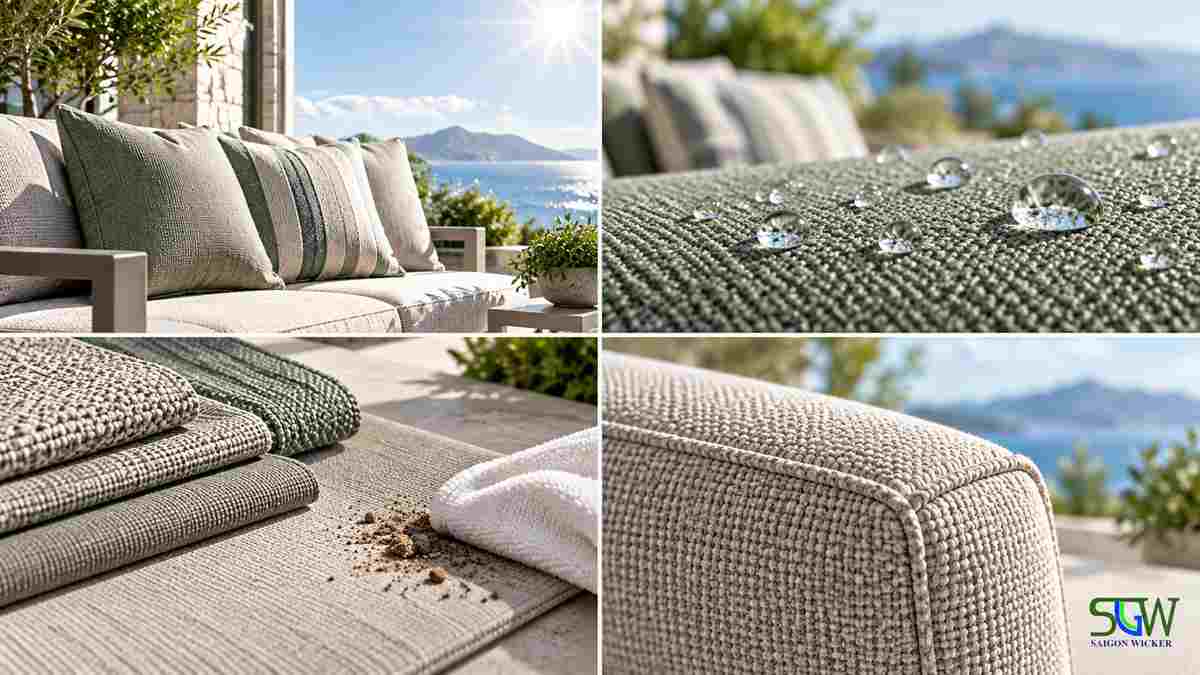
Texture and pattern can attract the buyer, but technical performance determines whether the fabric is suitable for the project.
When evaluating performance outdoor fabrics, buyers should ask for information relevant to the actual application.
This may include:
- Fiber composition
- Fabric weight
- Colorfastness
- Outdoor light resistance
- Weathering information
- Water repellency
- Abrasion resistance
- Tear or tensile strength
- Pilling performance
- Cleaning instructions
The
AATCC test-method portfolio
includes methods addressing areas such as outdoor light colorfastness, Xenon-Arc exposure, water repellency, rain resistance, abrasion, and weather exposure.
For example, AATCC TM16.1 addresses outdoor light colorfastness, while AATCC TM22 evaluates resistance to surface wetting by water.
Instead of accepting a broad statement such as:
“This is an outdoor fabric.”
B2B buyers should ask:
“Which performance characteristics have been specified or tested for this exact fabric?”
Fabric Weight Alone Does Not Define Quality
Fabric weight in g/m² is useful information, but it should not be treated as a complete quality rating.
Two fabrics with the same weight may use different:
- Fiber compositions
- Yarn sizes
- Weave structures
- Dyeing methods
- Finishes
- Back coatings
- UV stabilization
A heavier fabric is therefore not automatically better.
The correct specification depends on the product, target price, exposure, desired hand feel, and required performance.
For buyers comparing fiber options, our guide to
Olefin vs Polyester Outdoor Fabric
explains why fiber composition should also be evaluated together with the complete finished-fabric specification.
7. Use Fabric to Build a Collection, Not Just a Cushion
One of the most valuable developments for B2B buyers is using textile variation to expand a collection without redesigning the entire furniture structure.
For example, one sofa design might be offered as:
- Ivory textured fabric for a natural premium collection
- Grey fabric for a contemporary range
- Sage cushions for a garden-oriented collection
- Striped accent cushions for a resort direction
This gives retailers more visual variety while maintaining the same basic product engineering.
For hospitality projects, fabrics can also help differentiate zones.
A poolside area may use lighter solids, while a lounge terrace introduces stripes or richer textures using the same frame color and design language.
Well-planned performance outdoor fabrics therefore become part of collection architecture rather than simply the final upholstery choice.
Pattern and Color Consistency Matter for Repeat Orders
For B2B buyers, a fabric needs to work beyond the first sample.
Repeat orders may be placed months or even seasons later.
Buyers should therefore confirm:
- Approved color reference
- Pattern repeat
- Stripe width
- Pattern direction
- Batch variation tolerance
- MOQ
- Lead time
- Availability for repeat orders
This is particularly important for hotels, resorts, retailers, and private-label programs where replacement cushions may need to coordinate with products already in the market.
What About Textile Certification?
Performance and chemical-safety requirements should be treated as separate questions.
Depending on the target market or buyer program, textile documentation may also be required.
OEKO-TEX STANDARD 100
covers textiles tested for harmful substances, from yarn through finished textile products.
If certification is required, buyers should verify the actual fabric, certificate scope, supplier, and current validity rather than assuming that every textile from the same mill carries the same claim.
B2B Performance Outdoor Fabric Checklist
Before approving performance outdoor fabrics for a new collection, buyers should review:
- Fiber composition
- Fabric weight
- Physical fabric sample
- Hand feel and texture
- Approved color
- Pattern repeat
- Pattern direction
- UV or colorfastness information
- Water-repellency requirements
- Abrasion and durability requirements
- Cleaning instructions
- Fabric MOQ
- Repeat-order availability
- Certification where required
- Cushion and sewing compatibility
This approach helps buyers evaluate the actual commercial specification instead of choosing a fabric based only on an attractive swatch.
Performance Outdoor Fabrics at Saigon Wicker
Saigon Wicker’s outdoor furniture manufacturing capabilities build on more than 20 years of experience originating from outdoor cushion production.
Our furniture collections can combine powder-coated aluminum, steel, outdoor rope, synthetic wicker, wood, Textilene, glass, fabrics, and cushions. :contentReference[oaicite:1]{index=1}
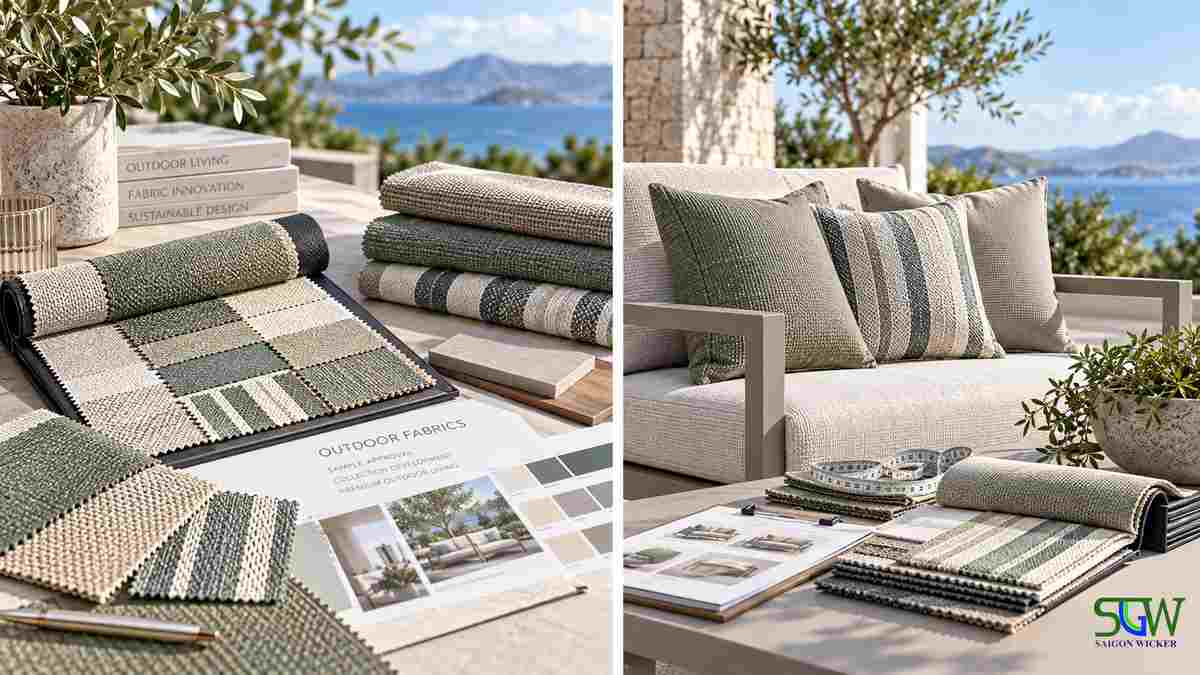
Depending on product feasibility and project requirements, cushion development can involve different fabric colors, weights, textures, cushion thicknesses, foam specifications, piping, zippers, decorative pillows, and other finishing details.
For B2B buyers, performance outdoor fabrics can be reviewed together with frame colors, rope or wicker, wood details, and the overall collection direction rather than selected independently at the end of development.
Learn more about
Saigon Wicker’s manufacturing capabilities
and
our approach to quality and long-term B2B partnerships
.
Frequently Asked Questions
What are performance outdoor fabrics?
Performance outdoor fabrics are textiles designed or specified to meet outdoor-use requirements such as colorfastness, durability, moisture handling, cleanability, or weather exposure depending on the particular fabric and application.
Are textured fabrics suitable for outdoor cushions?
Yes, when the selected textile meets the required outdoor performance specification. Buyers should also evaluate abrasion, snagging, cleaning, and how the texture behaves after repeated use.
Are striped outdoor cushions trending for 2027?
Stripes have become increasingly visible in outdoor design through 2026 and are likely to remain relevant heading into 2027 because they add visual identity without requiring a completely new furniture structure.
What patterns work best for outdoor furniture?
The best pattern depends on cushion size, furniture proportions, target market, and collection direction. Narrow stripes and smaller repeats can provide more flexibility across several furniture sizes.
Does heavier outdoor fabric mean better quality?
No. Fabric weight should be evaluated together with fiber composition, yarn, weave, finishing, UV performance, durability, and the intended application.
How should outdoor fabric performance be tested?
The required tests depend on the application and buyer specification. Relevant areas may include colorfastness to outdoor light, weathering, water repellency, abrasion, strength, and other textile-performance properties.
Can outdoor fabric colors and patterns be customized?
Depending on supplier capability, MOQ, yarn or printing process, buyers may be able to develop customized colors, patterns, stripes, textures, or coordinated fabric programs for a furniture collection.
Performance Outdoor Fabrics Are Becoming Part of the Design Story
Performance outdoor fabrics in 2027 are no longer defined only by whether they can tolerate outdoor exposure.
Texture, pattern, color, hand feel, and coordination are becoming more important as outdoor furniture continues to move closer to the comfort and visual richness of indoor living.
For B2B buyers, this does not mean performance should become secondary.
The strongest fabric programs combine both sides: a textile that looks desirable on the finished furniture and a specification that fits the intended environment, customer, maintenance routine, and commercial positioning.
In 2027, the best outdoor fabrics will not simply survive outside — they will help define why the furniture looks and feels worth buying.
Develop Your Outdoor Fabric Collection With Saigon Wicker
If you are developing outdoor sofas, dining furniture, lounge collections, sun loungers, daybeds, or hospitality seating, fabric and cushion specifications can be reviewed together with the complete furniture design.
Contact Saigon Wicker
and share your reference images, fabric direction, colors, patterns, cushion requirements, target quantities, or project specifications.