
For hospitality buyers, architects, designers, procurement teams, and sourcing companies, the right furniture specification needs to balance appearance with comfort, durability, maintenance, weather exposure, daily handling, and project positioning.
This guide looks at seven common resort zones and the key points B2B buyers should consider when selecting resort outdoor furniture.
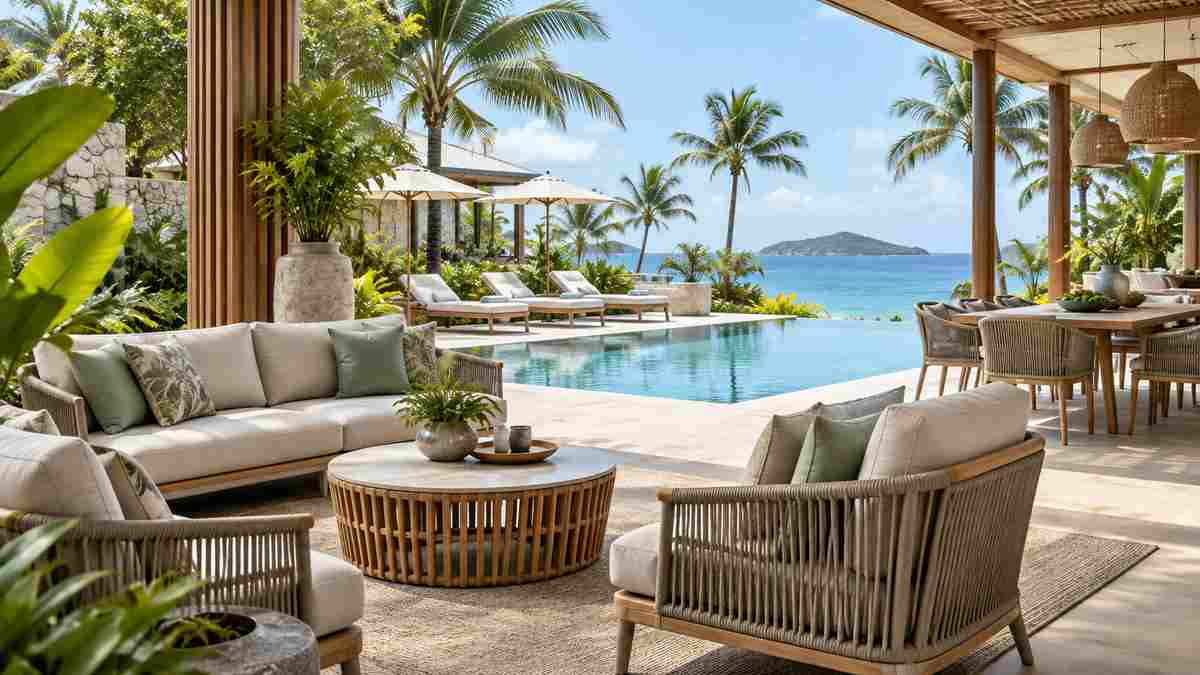
Resort Outdoor Furniture: Quick Area-by-Area Guide
| Resort Area | Main Priority | Furniture Direction |
|---|---|---|
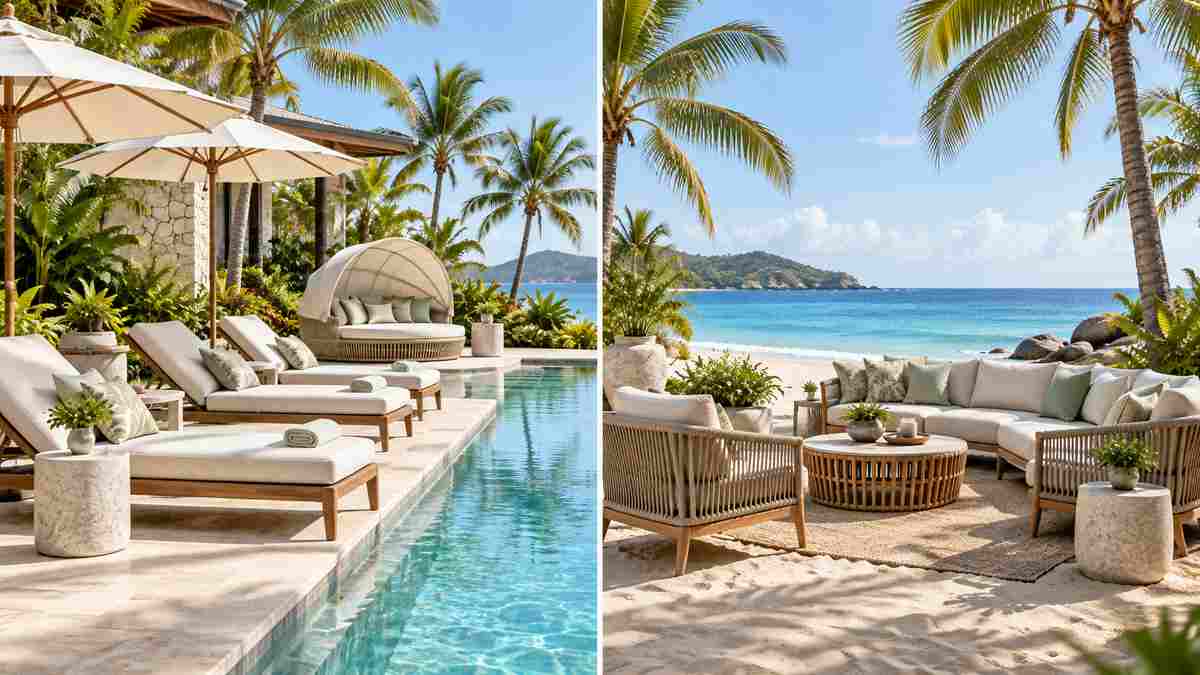
| Poolside | Water, cleaning, mobility | Sun loungers, side tables, lightweight seating |
| Beachfront | Salt, UV, wind, humidity | Stable lounge furniture with suitable outdoor finishes |
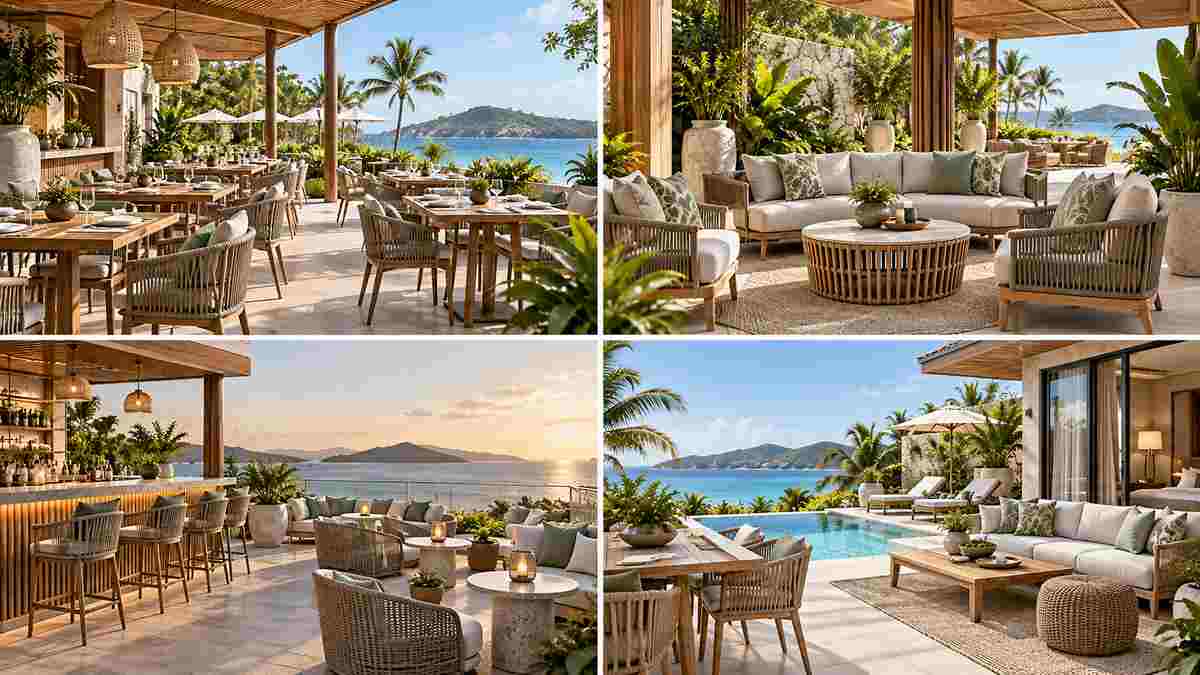
| Restaurant Terrace | High turnover, cleaning, space efficiency | Dining chairs and tables, preferably easy to move |
| Lobby & Lounge | Comfort and first impression | Deep seating, sofas, armchairs and coffee tables |
| Rooftop Bar | Wind, movement, flexible layouts | Bar seating, compact lounge and stable tables |
| Private Villas | Residential comfort | Sofa sets, dining sets and coordinated collections |
| Garden Areas | Flexible use and atmosphere | Dining, lounge and modular furniture |
The strongest resort projects usually do not use one furniture specification everywhere. Instead, products are selected according to the function and exposure of each zone.
1. Poolside Furniture: Prioritize Water, Cleaning and Mobility
Poolside furniture is exposed to frequent water, sunscreen, towels, cleaning, and constant guest turnover.
This makes practical performance especially important.
Common poolside products include:
- Sun loungers
- Side tables
- Daybeds
- Lounge chairs
- Small coffee sets
Powder-coated aluminum and Textilene can be practical options because they support lightweight construction and relatively easy cleaning.
If cushions are used, the complete cushion system should be considered — not only the fabric. Foam, drainage, seams, zippers, and drying conditions all influence how quickly the product can return to use.
For resort outdoor furniture around pools, buyers should also consider whether staff need to reposition furniture every day.
Heavy products may feel substantial but can create operational inconvenience if they must constantly be moved for cleaning or layout changes.
For more ideas, see our
Low-Maintenance Patio Furniture guide
.
2. Beachfront Areas: Specify for Coastal Exposure
Beachfront spaces create some of the most demanding conditions in a resort.
Furniture may be exposed to:
- Salt-containing air
- Strong sunlight
- High humidity
- Wind
- Sand
- Frequent cleaning
This means coastal resort outdoor furniture should be specified according to the environment rather than selected only by appearance.
For coated aluminum, buyers should discuss pretreatment, coating requirements, drainage, hardware, and maintenance with the supplier.
QUALICOAT technical guidance
highlights coastal environments as areas where chloride exposure can increase corrosion risk.
Outdoor fabrics, rope, synthetic wicker, and wood finishes should also be selected with strong UV, humidity, and maintenance requirements in mind.
A product that performs well on a covered terrace may require a different specification when placed directly beside the sea.
3. Restaurant Terraces: Focus on Daily Operations
Outdoor restaurant furniture usually experiences more movement than lounge furniture.
Staff may reposition tables and chairs several times a day for cleaning, table combinations, guest groups, or closing procedures.
Important considerations include:
- Chair weight
- Stackability
- Table stability
- Cleaning access
- Seat comfort
- Spacing between tables
- Replaceable components
Dining chairs should be comfortable enough for extended meals without becoming unnecessarily bulky.
Stackable construction may also help resorts store furniture more efficiently during maintenance, events, or seasonal changes.
For restaurant terraces, the best resort outdoor furniture often balances commercial durability with quick daily handling.
4. Lobby and Outdoor Lounge Areas: Comfort Comes First
Outdoor lounge spaces play a different role.
Guests may stay longer, meet other people, wait for transportation, enjoy drinks, or simply relax.
Suitable products may include:
- Two- and three-seat sofas
- Armchairs
- Modular seating
- Coffee tables
- Side tables
- Daybeds
Comfort should therefore receive more attention than stackability.
Seat depth, backrest angle, cushion thickness, armrest position, and overall proportions all influence how the furniture feels.
This is also an area where mixed materials can create stronger visual impact.
Powder-coated aluminum can provide structure, while rope or synthetic wicker adds texture, wood introduces natural warmth, and cushions improve comfort.
Buyers comparing woven materials can read our
Outdoor Rope vs PP Rattan guide
.
5. Rooftop Bars: Balance Design, Stability and Flexibility
Rooftop spaces can become some of the most memorable areas of a resort, but they also introduce special operational considerations.
Furniture may need to support:
- Flexible seating layouts
- Evening service
- High guest turnover
- Wind exposure
- Limited storage
- Frequent repositioning
Bar stools, compact lounge seating, high tables, and modular pieces can work well where layouts need to change throughout the day.
However, lightweight furniture should not be selected without considering local wind conditions and project-specific safety requirements.
For rooftop resort outdoor furniture, mobility and stability need to be considered together.
6. Private Villas and Suites: Create a Residential Experience
Private villas often allow hospitality furniture to feel more residential.
Guests may use the outdoor area for breakfast, reading, private dining, relaxing, or entertaining.
A coordinated villa package may include:
- Sofa set
- Armchairs
- Coffee table
- Dining set
- Sun loungers
- Side tables
Rather than selecting each item independently, buyers can use the same frame finish, rope color, wood detail, or cushion fabric across several products.
This creates a stronger visual connection throughout the villa while also simplifying material approval and replacement planning.
For this zone, resort outdoor furniture should provide the comfort of residential furniture while maintaining the durability expected from hospitality use.
7. Gardens and Flexible Outdoor Areas: Think in Collections
Large resort gardens, courtyards, lawns, and landscaped areas may be used differently throughout the year.
One area may support breakfast in the morning, casual seating in the afternoon, and events in the evening.
Furniture should therefore allow flexibility.
Useful directions include:
- Modular lounge furniture
- Moveable coffee tables
- Lightweight dining chairs
- Coordinated dining and lounge collections
- Furniture with replaceable cushions
- Tables in multiple sizes
Instead of purchasing unrelated products, a coordinated collection can help the resort maintain a consistent design language across multiple areas.
How Should Resort Buyers Choose Materials?
No single material is ideal for every part of a resort.
A practical material strategy may combine:
- Powder-coated aluminum for lightweight structural frames
- Outdoor rope for softer contemporary texture
- Synthetic wicker for woven outdoor character
- Textilene for lower-maintenance seating
- Teak or other suitable wood for natural accents
- Outdoor fabrics and cushions where comfort is the priority
The right specification depends on exposure, design direction, maintenance expectations, target price, and daily operations.
Professional buyers should therefore avoid selecting resort outdoor furniture based only on catalog photographs.
Maintenance Should Influence Furniture Selection
Resort furniture is maintained by staff, not by the person who selected it.
This makes maintenance an important procurement consideration.
Before approving a collection, ask:
- Can surfaces be cleaned easily?
- Can cushions be removed?
- Can covers be replaced?
- Can furniture be moved by one or two staff members?
- Are replacement hardware and components available?
- Does water drain easily?
- Are there areas where dirt can accumulate?
A beautiful product that requires excessive daily maintenance may not be the best commercial choice for a high-traffic resort.
Approve the Furniture in the Context of the Project
Samples should be reviewed for more than appearance.
Hospitality buyers should evaluate:
- Dimensions
- Comfort
- Seat height
- Stability
- Materials
- Colors
- Finish
- Cleaning access
- Weight and mobility
- Cushion construction
- Packaging
Whenever possible, the sample should be considered in relation to the actual resort area.
A dining chair may look excellent alone but still be too wide for the planned restaurant layout.
A deep sofa may be extremely comfortable but unsuitable for a narrow guest-room balcony.
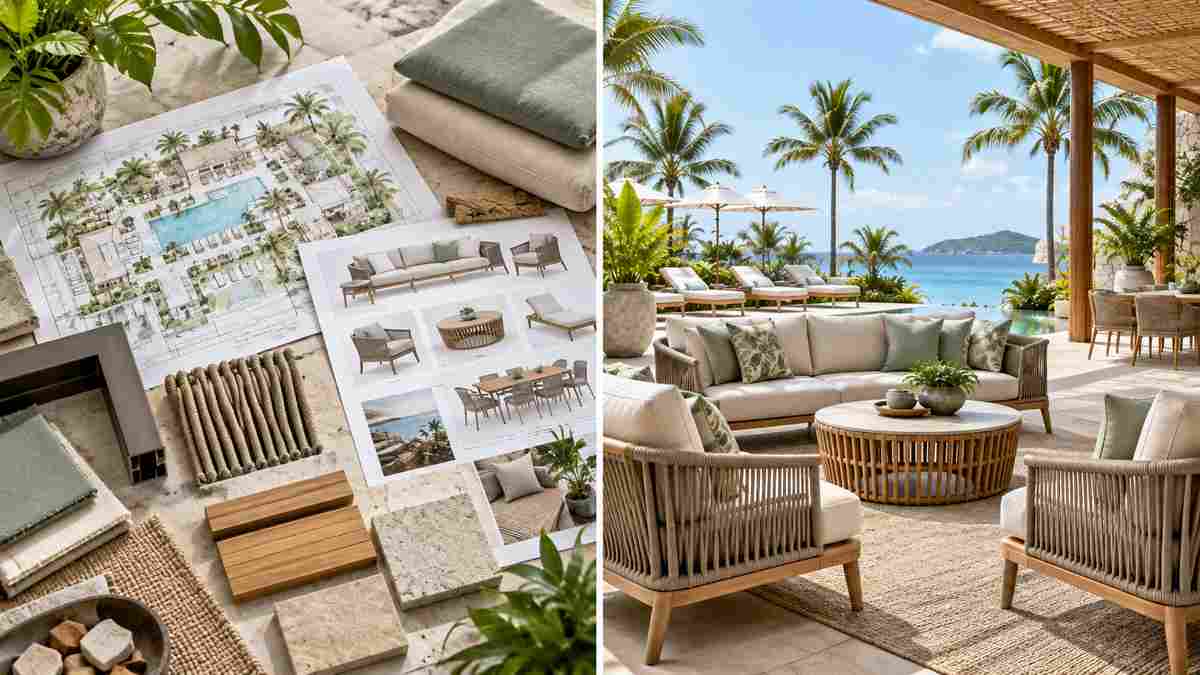
Resort Outdoor Furniture Buyer Checklist
Before confirming a hospitality furniture order, buyers should define:
- Resort area or application
- Expected weather exposure
- Target materials
- Furniture dimensions
- Required comfort level
- Daily cleaning requirements
- Stacking or storage needs
- Furniture mobility
- Color and finish direction
- Cushion specifications
- Replacement requirements
- Packaging
- Quantity by area
- Installation or delivery schedule
A clear area-by-area specification helps manufacturers develop more appropriate resort outdoor furniture instead of applying one solution to the entire project.
Resort Outdoor Furniture Development at Saigon Wicker
Saigon Wicker develops outdoor furniture for international residential and hospitality markets.
Our material capabilities include powder-coated aluminum, steel, outdoor rope, synthetic wicker, wood, Textilene, glass, outdoor fabrics, and cushions.
Depending on project requirements, products can be developed with custom dimensions, frame finishes, weaving materials, fabrics, cushion specifications, wood details, configurations, labels, and export packaging.
For hospitality projects, different zones can be developed around a coordinated material and design direction while maintaining the functional requirements of each area.
Learn more about
Saigon Wicker’s manufacturing capabilities
and
our approach to quality and B2B partnerships
.
Frequently Asked Questions
What is the best outdoor furniture for a resort?
There is no single best furniture type for an entire resort. Poolside, beachfront, dining, lounge, rooftop and villa areas should each be specified according to use, environment, comfort, maintenance and design requirements.
What materials are commonly used for resort outdoor furniture?
Common materials include powder-coated aluminum, steel, rope, synthetic wicker, Textilene, outdoor wood, glass, outdoor fabrics and cushions. The right combination depends on the project area and exposure.
What furniture is best for resort pool areas?
Sun loungers, daybeds, side tables and easy-to-clean lounge seating are common options. Buyers should prioritize water exposure, drainage, cleaning, mobility and cushion drying requirements.
What should be considered for beachfront resort furniture?
Buyers should consider salt exposure, UV, humidity, wind, coating systems, hardware, woven materials, fabric specifications, drainage and maintenance.
Should resort restaurant chairs be stackable?
Stackability can be useful where chairs need frequent movement or storage, but comfort, structural stability, size and design should also be considered.
Can different resort areas use the same furniture collection?
Yes. A coordinated collection can share frame colors, materials, fabrics and design details, while individual products are adapted to the functional requirements of each area.
Can resort outdoor furniture be customized?
Depending on manufacturing feasibility, B2B buyers may customize dimensions, frame finishes, rope or wicker colors, fabrics, cushions, wood details, configurations, branding and packaging.
Select Resort Furniture by Area, Not by Product Photo Alone
Successful resort outdoor furniture planning requires more than selecting attractive chairs, sofas and tables.
Each area has a different purpose, level of exposure, maintenance routine and guest experience.
Poolside furniture should handle water and frequent movement. Beachfront products require greater attention to environmental exposure. Restaurant terraces need operational efficiency. Lounge areas prioritize comfort. Rooftops require flexibility and stability, while private villas benefit from coordinated residential-style collections.
The best resort furniture strategy is to match the product specification to the way each space will actually be used.
Discuss Your Resort Outdoor Furniture Project With Saigon Wicker
If you are developing a resort, hotel, villa, poolside, beachfront or hospitality outdoor project, Saigon Wicker can review your furniture requirements by area.
Contact Saigon Wicker
and share your drawings, layout plans, reference images, target quantities, materials, finishes or project specifications.